



Automation
What Is Model Context Protocol and How It Works
Learn what is Model Context Protocol, how MCP connects AI assistants to tools and data, and why it matters for modern software teams.
October 19, 2026

Security
ACME vs Manual Certificate Management: The Enterprise Comparison
Manual certificate management turns every renewal into a small operational project. ACME automation replaces repetitive certificate work with a verified, monitorable workflow that scales with your redirect portfolio.
July 22, 2026

Security
How Enterprise Redirect Platforms Automate SSL Management
With Let's Encrypt moving to 45-day certificate lifetimes and the CA/B Forum pushing shorter durations industry-wide, manual SSL management across hundreds of redirect domains is no longer viable. Here's how enterprise redirect platforms use ACME automation to provision, renew, and monitor SSL certificates at scale — with zero human intervention.
July 17, 2026

Security
Redirect Infrastructure Checklist for the 45-Day Certificate Era
A practical, actionable checklist for infrastructure teams preparing for the shift to 45-day SSL certificate lifetimes. Assess your automation, monitoring, renewal, alerts, wildcards, and disaster recovery — before the timeline shrinks.
July 10, 2026

Security
Why Shorter Certificate Lifetimes Make Manual Redirect Management Unsustainable
SSL certificate lifetimes are about to be cut in half — from 90 days to 45 days. For most website owners running a handful of domains, this barely registers. But for teams managing hundreds or thousands of redirect domains, the operational math shifts from manageable to mathematically unsustainable.
July 4, 2026

Security
Let's Encrypt 45-Day Certificates: Timeline and How to Prepare
Let's Encrypt is cutting certificate lifetimes from 90 to 45 days between 2026 and 2028, and the CA/Browser Forum caps every public certificate at 47 days by 2029. The dates, what changes for renewals, ACME vs manual, and a checklist for redirect domains.
July 1, 2026

Automation
Build a Redirect Bot: From Zero to AI-Powered Redirect Manager
Managing redirects for a growing site or portfolio is repetitive work — create the record, verify DNS, check SSL, monitor uptime, update when things change. Multiply that by hundreds or thousands of…
June 29, 2026

Url-redirects
5 Redirect Tasks You Should Never Do Manually
Managing URL redirects by hand made sense when your site had 20 pages. But at scale — hundreds of links, multiple domains, frequent updates — manual redirect management becomes a bottleneck that costs time, money, and SEO rankings.
June 15, 2026

Automation
MCP 101: Why Your AI Agent Needs to Do Things, Not Just Talk
AI can write, analyze, and strategize. But it can't deploy, publish, or configure anything outside its chat window. MCP is the protocol that turns AI from a talker into a doer.
June 9, 2026

Automation
Connect Your Redirects to Claude, Cursor, or Codex in 5 Minutes
Connect RedirHub's MCP server to Claude, Cursor, or Codex in 5 minutes. Step-by-step setup with screenshots. Manage redirects from your AI agent — included on every RedirHub plan.
June 8, 2026

Automation
What Is an MCP Server? (And Why Your Redirects Need One)
You open your laptop. You have 47 redirects to update across three domains. You log into the dashboard. Click. Type. Repeat. There's a better way — and it starts with three letters: MCP.
May 31, 2026

Automation
MCP Server Launch: AI Agent Redirect Management on Every Plan
Manage URL redirects, short links, domains, and workspace members from any AI agent — included on every RedirHub plan.
May 29, 2026

Url-redirects
Phone Brand Detection: Redirect to Relevant App Store
Phone brand detection helps websites automatically identify a user’s device and redirect them to the correct app store for downloading mobile applications. By analyzing device information such as operating system and browser user-agent data, developers can guide users to the Apple App Store or Google Play Store without confusion. This approach improves app discovery, enhances user experience, and increases mobile app installation rates.
October 5, 2023
Url-redirects
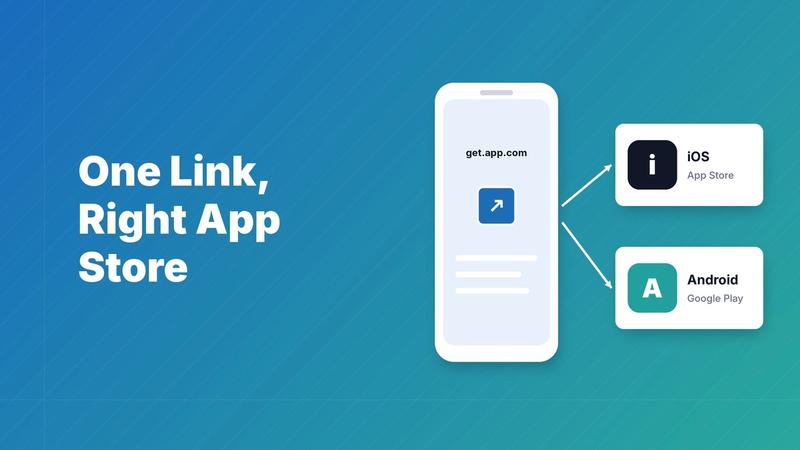
Guide: Redirect Users to the App Store or Google Play By OS
OS-based redirection automatically directs users to the correct app store depending on whether they are using an Android or iOS device. By detecting the user’s operating system through browser data or user-agent strings, websites can send users directly to the Google Play Store or Apple App Store. This improves user experience, increases app download conversions, and simplifies app discovery.
October 1, 2023

Url-redirects
iOS/Android Detection: Redirect The Link To The App Or Landing Page
iOS and Android detection helps websites identify a user’s mobile operating system and redirect them to the most relevant destination, such as a mobile app or optimized landing page. By analyzing device information like user-agent data or using JavaScript detection, businesses can create a tailored mobile experience that improves engagement, increases app downloads, and ensures compatibility across different devices.
October 1, 2023

Url-redirects
New Feature: Random Redirect
RedirHub’s latest feature, Multi-Target Redirect, allows users to easily redirect visitors to multiple target URLs randomly or sequentially. Ideal for A/B testing, affiliate marketing, and geo-targeting. Learn how to use this valuable addition to any marketing toolkit.
April 28, 2023

Url-redirects
How to Use RedirHub to Randomly Redirect to Multiple Links
Random URL redirects allow website owners to send visitors to different destination links automatically. This technique is commonly used for A/B testing, traffic distribution, marketing campaigns, or rotating landing pages. With RedirHub’s multi-address redirection feature, you can easily set up random redirects by adding multiple destination URLs and selecting the random traffic option, allowing visitors to be redirected to different pages automatically.
April 27, 2023